Illuminated or Non-Illuminated Signage: Which Is Right for Your Business?
Illumination can make signage visible long after daylight has disappeared, but that does not mean every sign needs to light up. The right answer depends on the building, the surrounding environment and what the sign needs to achieve.
Choosing between illuminated and non-illuminated signage early helps create a design that looks intentional, meets practical requirements and remains straightforward to maintain.
Start with when the sign needs to be seen
Trading hours are one of the clearest factors. Restaurants, gyms, convenience stores, entertainment venues and businesses operating into the evening can gain obvious value from illumination.
For an office that closes before dusk or an internal sign used only during working hours, lighting may add cost without delivering much practical benefit.
The surrounding environment also matters. A building on a brightly lit retail park may require stronger contrast than a location on a darker road. A sign does not need to be the brightest object nearby, but it does need to remain clear and legible.
Consider the viewing distance
A sign viewed from across a car park or moving vehicle has a different job from one seen by pedestrians at close range.
At longer distances, simple letterforms, clear spacing and strong contrast usually matter more than decorative detail. Illumination can support visibility, but it cannot correct an overly complicated design.
For close-range signage, subtle lighting can create a premium effect without overwhelming the surrounding architecture.
Understand the main illumination options
Illuminated signage is not one single product. Different methods create very different results.
Face illumination
Light passes through the front face of letters or a sign panel. This creates a strong, direct appearance and works well where visibility is the priority.
Halo illumination
Light is projected behind the letters onto the wall, creating a softer glow around each character. Halo illumination can feel refined, but it depends on a suitable background surface and enough stand-off distance.
Trough lighting
An external lighting unit illuminates the face of a non-illuminated sign. It can be practical for larger boards or traditional sign styles, although the fittings remain visible.
Internally illuminated boxes or trays
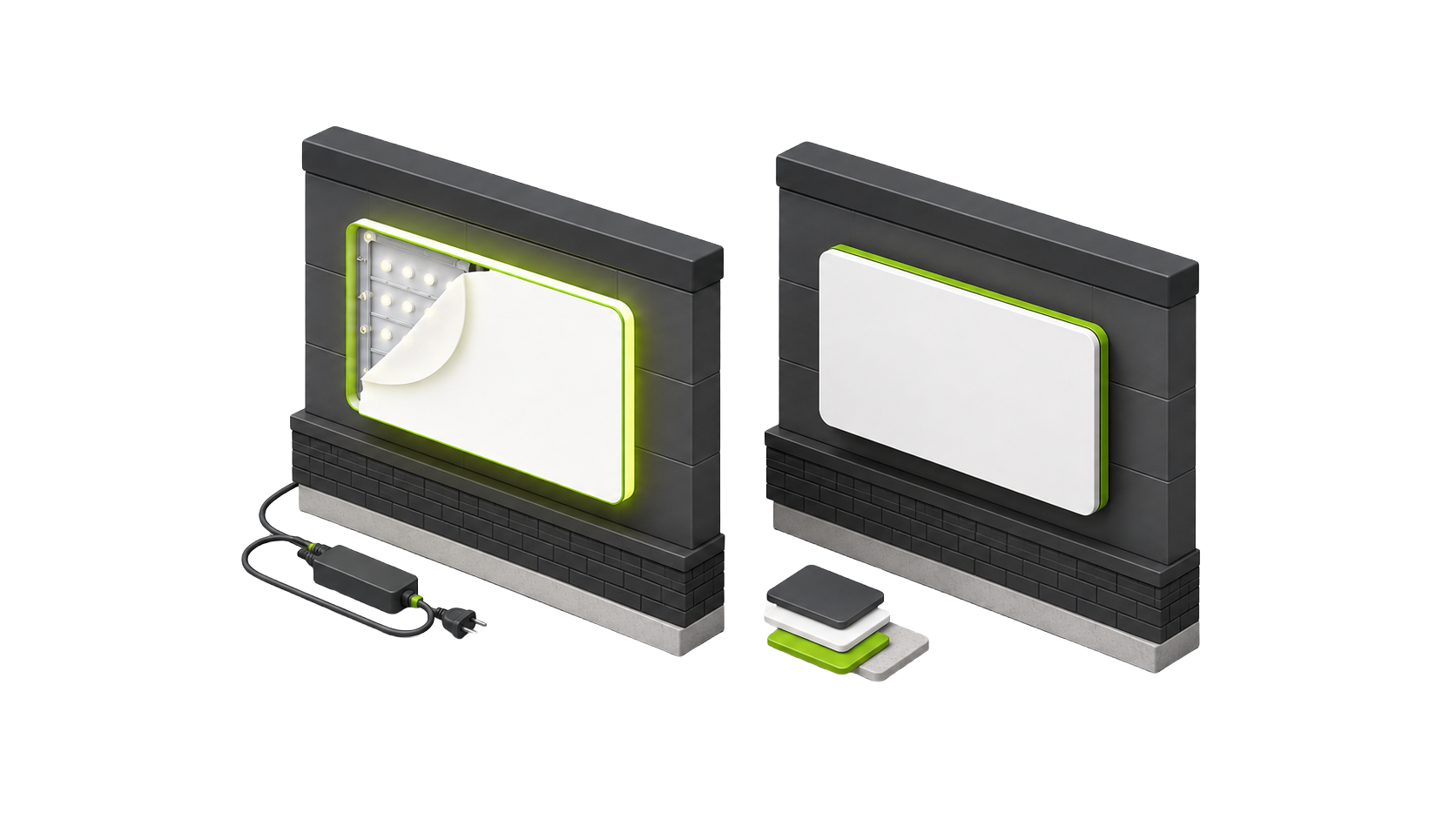
LEDs sit inside a fabricated enclosure and illuminate acrylic details, fret-cut lettering or a complete face. This approach offers considerable design flexibility but needs careful construction to distribute light evenly.
Non-illuminated does not mean basic
A non-illuminated sign can still have depth, texture and impact. Built-up letters, powder-coated trays, folded aluminium, layered acrylic and high-quality finishes can all create a strong result during daylight.
For some buildings, a carefully proportioned non-illuminated sign is more appropriate than visible lighting. It may also simplify electrical work and ongoing maintenance.
Check planning and landlord requirements
Depending on the location and sign type, advertisement consent or other approval may be required. Illumination levels, operating times, projection and positioning can all be restricted.
Listed buildings, conservation areas, shopping centres and managed estates may have additional design rules. These should be understood before the design is finalised.
The landlord may also specify approved cable routes, fixing methods or electrical contractors.
Account for power and cabling
Illuminated signage needs a suitable electrical supply. The neatest result normally comes from planning the cable route alongside the sign rather than treating it as an afterthought.
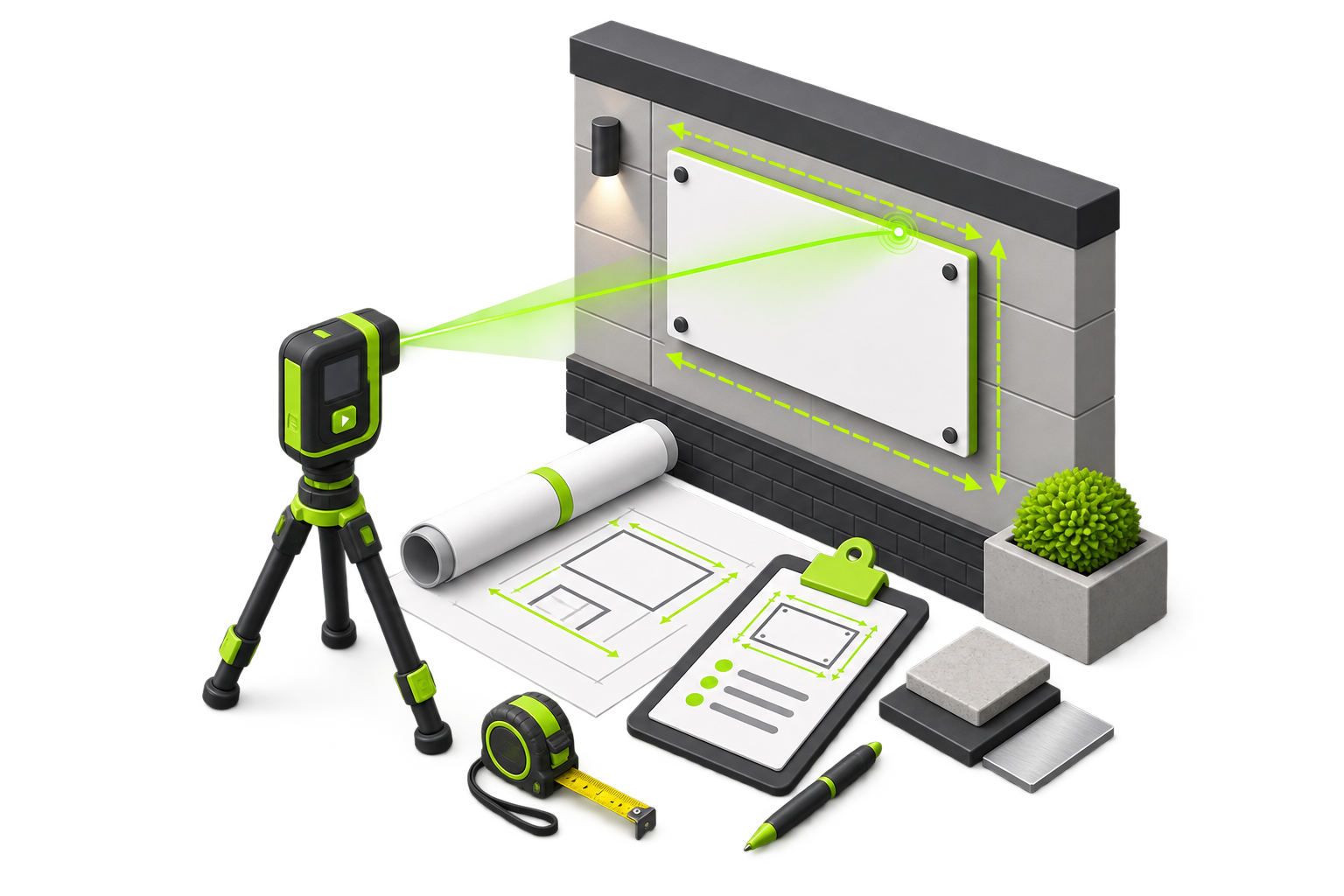
A survey should identify likely power locations, isolation requirements and whether cabling can pass through the wall safely. It should also consider access to transformers, drivers and connections for future maintenance.
Think beyond the initial cost
LED systems are efficient and reliable, but illuminated signs still contain components that may eventually need attention. Access height, opening hours and the construction of the sign can all influence maintenance cost.
Non-illuminated signage normally has fewer components, although finishes and graphics can still weather over time.
The best comparison considers expected lifespan, cleaning, access and component replacement as well as the original quotation.
Make the choice around the objective
Illumination is valuable when it improves visibility, supports trading hours or strengthens the intended brand experience. It is unnecessary when it adds complexity without improving how the sign performs.
Exton Group designs, supplies and installs both illuminated and non-illuminated signage. By considering the building, viewing conditions and practical requirements together, we can help identify the option that suits the project rather than defaulting to the most complicated specification.
Stay in the loop
Get our latest projects, practical insights and company updates from across signs, retail and digital, delivered straight to your inbox.