Digital Signage in Retail: Where It Adds Value and Where It Does Not
Digital signage gives retailers the ability to change content without replacing printed graphics. Promotions can be scheduled, information can respond to different times of day and multiple locations can be updated from one platform.
That flexibility is valuable, but installing a screen does not automatically improve the customer experience. Digital signage works best when it solves a clear communication problem and has an operating plan behind it.
Begin with the purpose
Before discussing screen size or technology, define what the display needs to achieve.
Common objectives include:
- Promoting products or services
- Showing changing prices, menus or availability
- Helping customers navigate the space
- Communicating queue or service information
- Supporting a campaign across multiple locations
- Creating movement or visual interest in a window
A screen trying to do all of these at once can become difficult to understand. A clear primary purpose makes it easier to choose the right position, format and content.
Position matters more than size
A very large display in the wrong location can be less effective than a smaller one placed at the natural decision point.
Consider where customers enter, pause, queue and change direction. The viewing distance and angle should influence screen size, mounting height and content scale.
Window displays need enough brightness to compete with daylight and reflections. Interior screens should not obstruct routes or create uncomfortable glare. Any display installed close to customers also needs to be physically secure and resistant to accidental impact.
Design content for the environment
Digital signage content is not the same as a television advert or social media post. People may only look for a few seconds, often while moving.
Effective content normally uses:
- One clear message at a time
- Large, legible typography
- Strong contrast
- Restrained animation
- Simple calls to action
- Timing that allows the message to be understood
Long paragraphs, rapid transitions and crowded layouts reduce the chance of anything being remembered.
The content should also feel connected to the physical environment. Colour, spacing and motion need to complement the store rather than appearing as a separate digital layer.
Plan how content will be managed
The most important operational question is often overlooked: who will keep the content accurate and current?
The project should establish:
- Who creates and approves content
- How updates are uploaded
- Whether locations can edit their own information
- How campaigns are scheduled and removed
- What happens when information is out of date
- Who responds if a screen goes offline
A content management system can make updates easier, but responsibilities still need to be clear. An old promotion left on screen can damage trust more quickly than a printed poster with a fixed end date.
Consider connectivity and resilience
Some systems require a permanent internet connection, while others can store content locally and continue playing if the connection fails.
The right approach depends on how often content changes and how important live information is. A menu board showing current availability has different requirements from a screen playing a fixed brand film.
Network security, remote access and software updates should be considered alongside the physical installation. Screens and media players also need accessible power, ventilation and a safe method of maintenance.
Integrate the hardware properly
Digital signage looks most effective when it feels designed into the environment. Visible cables, oversized brackets and poorly finished surrounds can undermine good content.
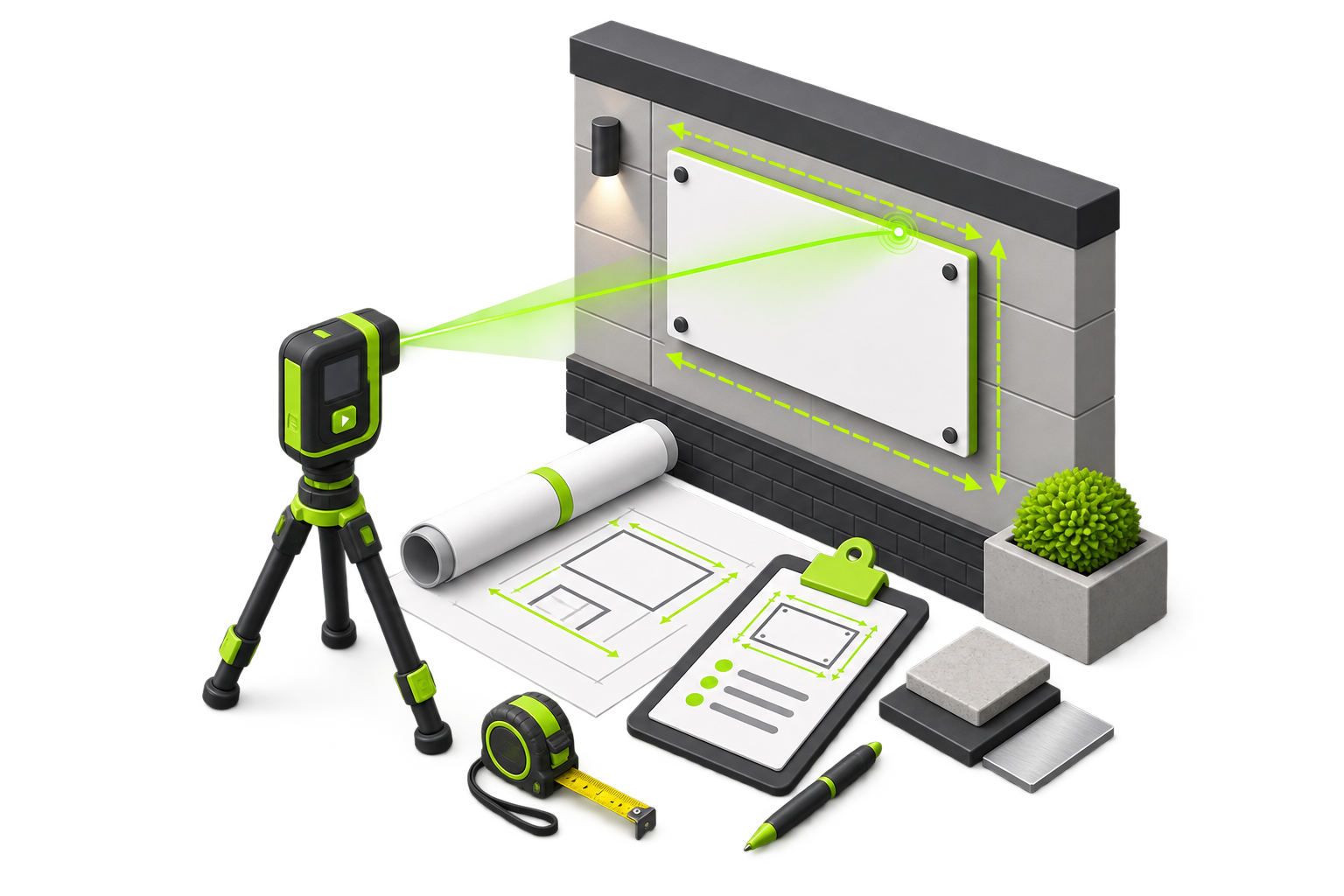
The survey and design should consider:
- Wall construction and fixing points
- Recesses, frames or fabricated surrounds
- Power and data routes
- Ventilation and heat
- Screen replacement and maintenance access
- Viewing angle and reflection
- Protection in public areas
Coordination between the digital, electrical, furniture and signage packages helps produce a much cleaner result.
Measure something meaningful
The success of digital signage should be linked to its objective. Depending on the application, this might include campaign uptake, reduced perceived waiting time, fewer customer questions, improved navigation or quicker content changes across several locations.
Not every benefit needs to be measured through direct sales. Operational improvements and consistency can also justify the investment.
However, if nobody can explain what success looks like, it will be difficult to judge whether the screen is doing useful work.
Know when physical signage is better
Digital is not automatically the premium option. A permanent directional sign, brand identifier or safety message may be clearer, more reliable and less expensive as a physical product.
Printed and fabricated signage does not require software, connectivity or content management. It can also use materials, depth and lighting to become part of the architecture in a way a standard screen cannot.
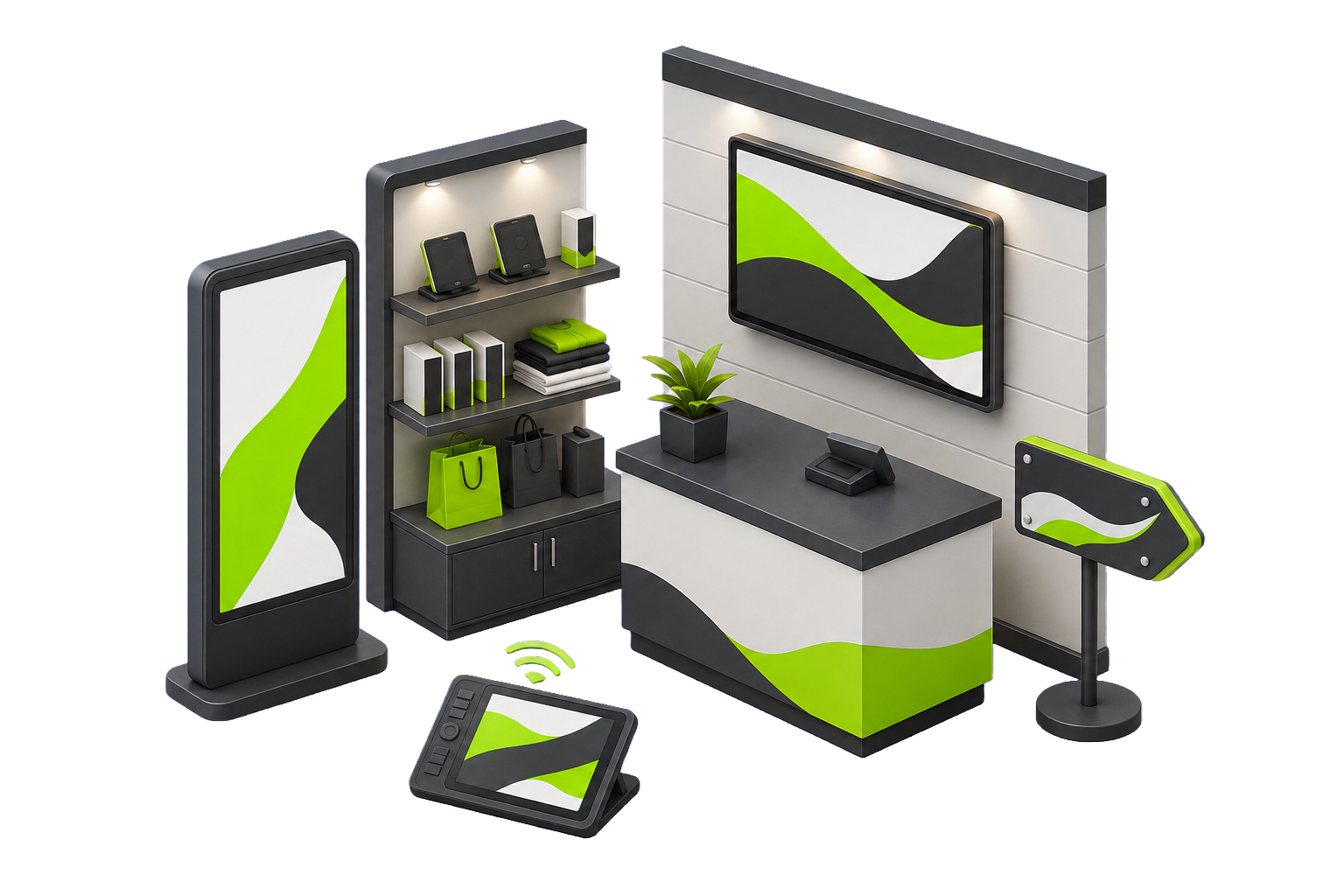
Many strong retail environments combine both. Physical signage provides consistency and permanence, while digital displays handle information that genuinely needs to change.
Use technology with a clear reason
Digital signage adds value when it improves flexibility, relevance or customer understanding. It adds complexity when it is introduced without a purpose or plan.
Exton Group brings together physical signage, retail delivery and digital thinking. That allows each project to be considered as one environment, choosing technology where it improves the outcome and keeping things simple where it does not.
Stay in the loop
Get our latest projects, practical insights and company updates from across signs, retail and digital, delivered straight to your inbox.